An Atlantic beginning
Alonso Soltero named Gibraleón, near Huelva on Spain’s Atlantic coast, as the place he came from. In a veteran’s account later printed by Francisco A. de Icaza, he identified his parents as Diego Alonso Cansino, of Huelva, and Leonor Martyn, called la Soltera. He said he crossed to New Spain aboard the ship in which Juan de Burgos traveled. The account counted twenty-eight years since that crossing without giving the voyage a secure calendar date.
Across the ocean lay the lake city of Tenochtitlan. Alonso would later claim a place in its capture, name campaigns farther south, and make his home in Los Ángeles, now Puebla. Other records carry the story from conquest and public claims into the life of his family.
[1] [3]Before the siege of 1521
Toward the island capital
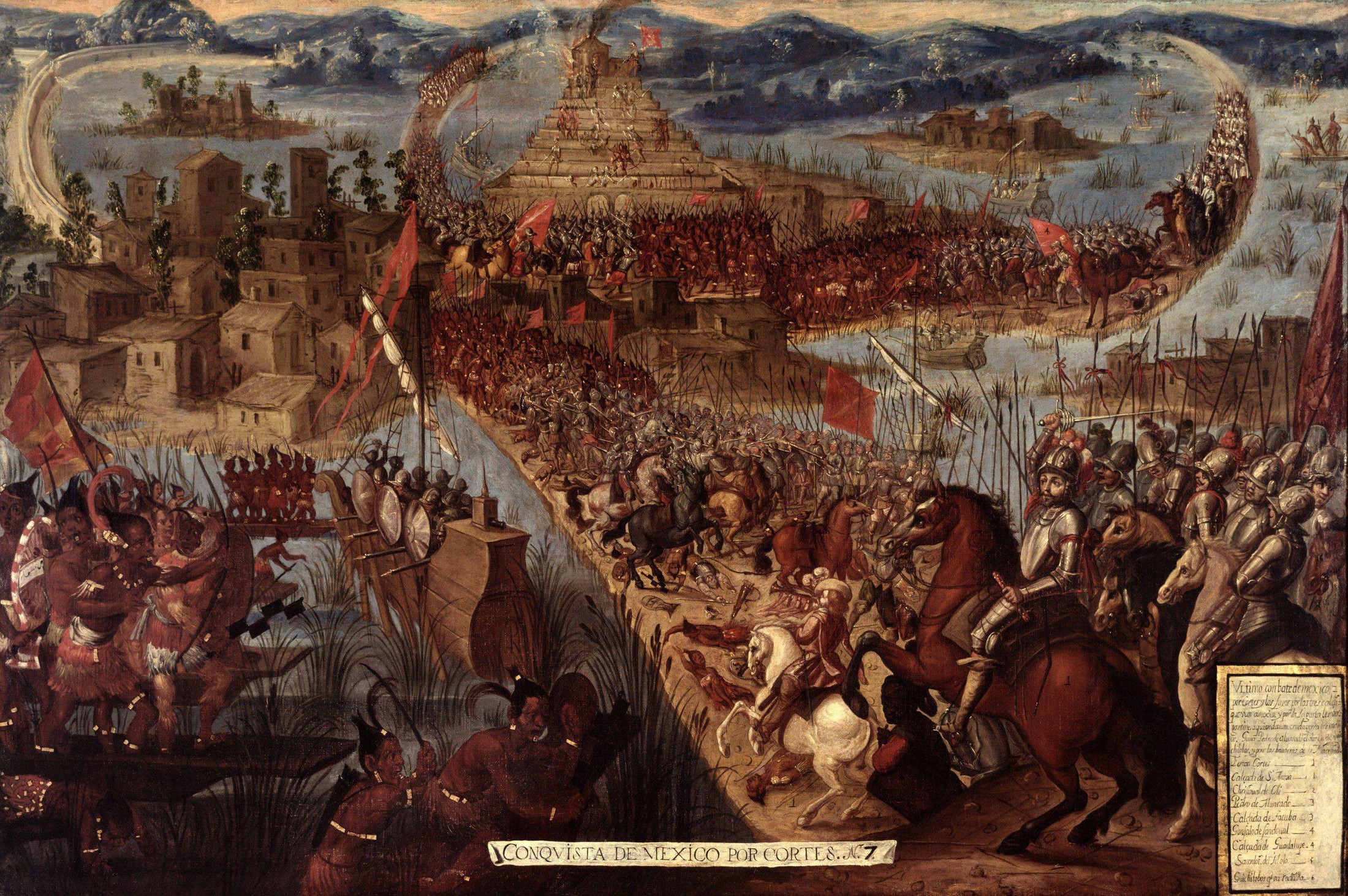
Before Cortés returned to Mexico City for the second time, Alonso came to him at Tepeaca. A royal assessment made in 1542 places Alonso beneath precisely that group heading. In his own account, Alonso later said he had taken part in the capture of Mexico. The two accounts establish his place in the campaign without assigning him a particular causeway, vessel, or action during the siege.
[1] [3]1521
How the island city fell
By 1520, Spanish forces and their Indigenous allies had been driven out of Tenochtitlan. They regrouped in Tlaxcala, facing a city protected by water and by causeways that its defenders could break. To return, they needed to fight on land and on the lake.
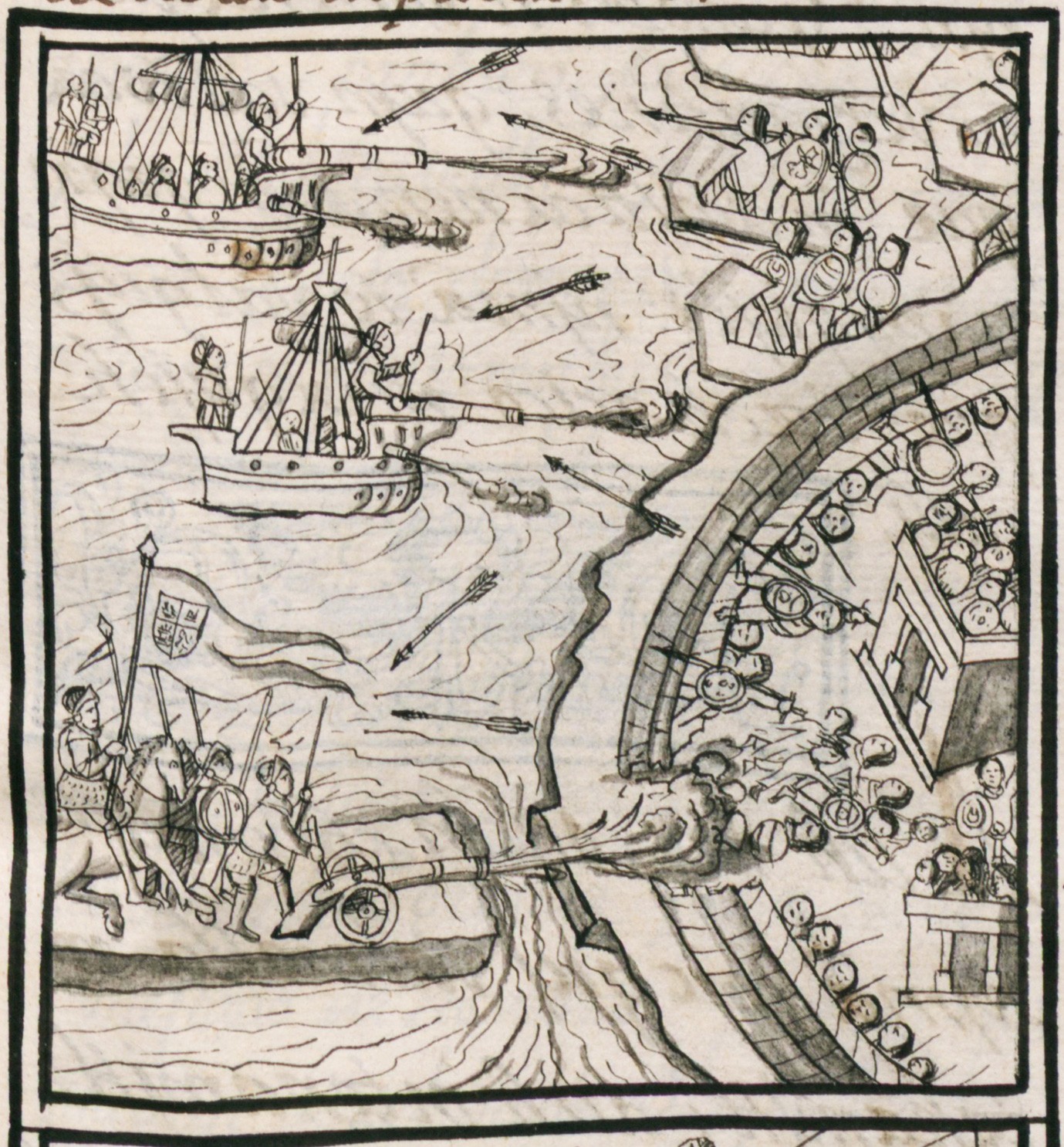
Tlaxcalan workers cut and shaped timber for thirteen brigantines. Indigenous porters carried their pieces over difficult country to Tetzcoco, where the vessels were assembled and launched through a canal. The fleet supported assaults along the causeways and helped close off the city’s supplies. A Mexica account in the Florentine Codex remembers cannon fire from the boats and its devastating effect.
Inside the besieged capital, hunger and thirst compounded the assaults and counterattacks. Tenochtitlan and Tlatelolco fell on 13 August 1521. Alonso’s service claim places him in that campaign; it does not trace his individual movements through the fighting.
[1] [3] [4] [7] [8] [9]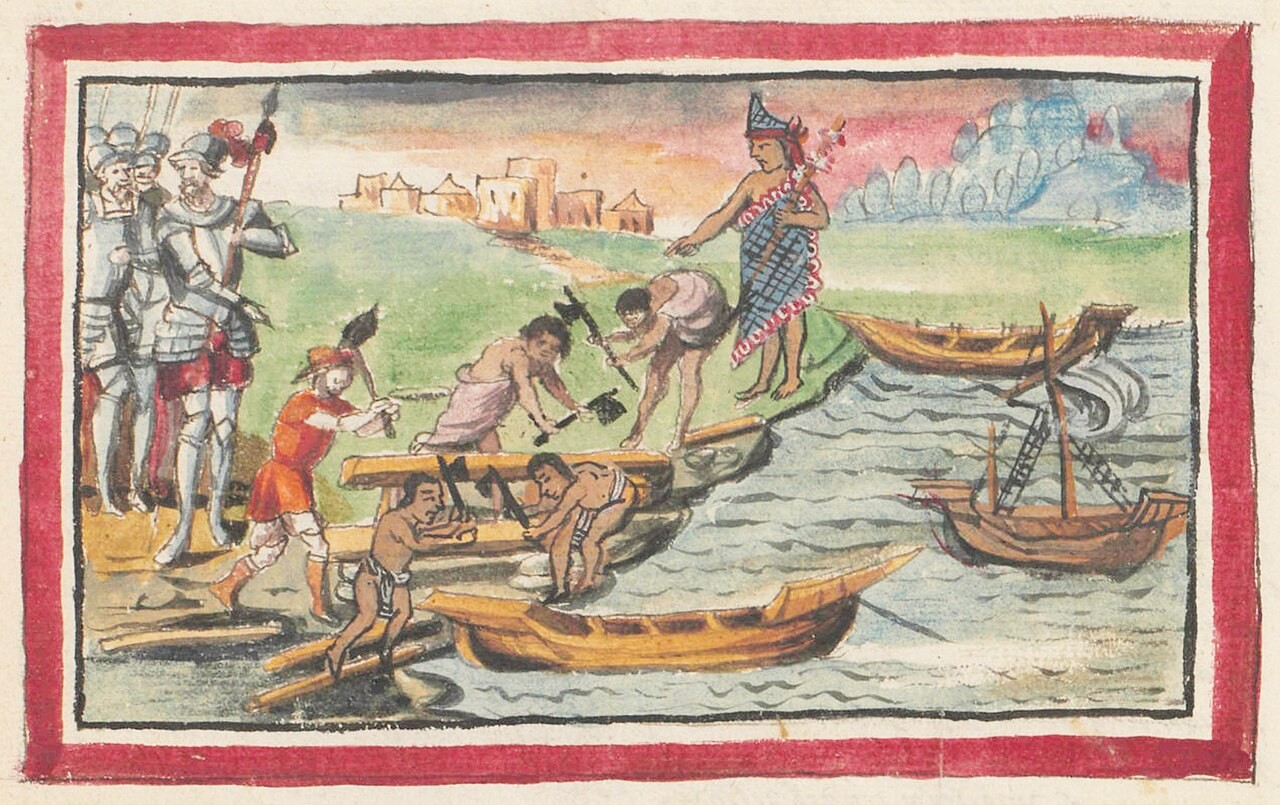
From the historical record
The island city in 1524
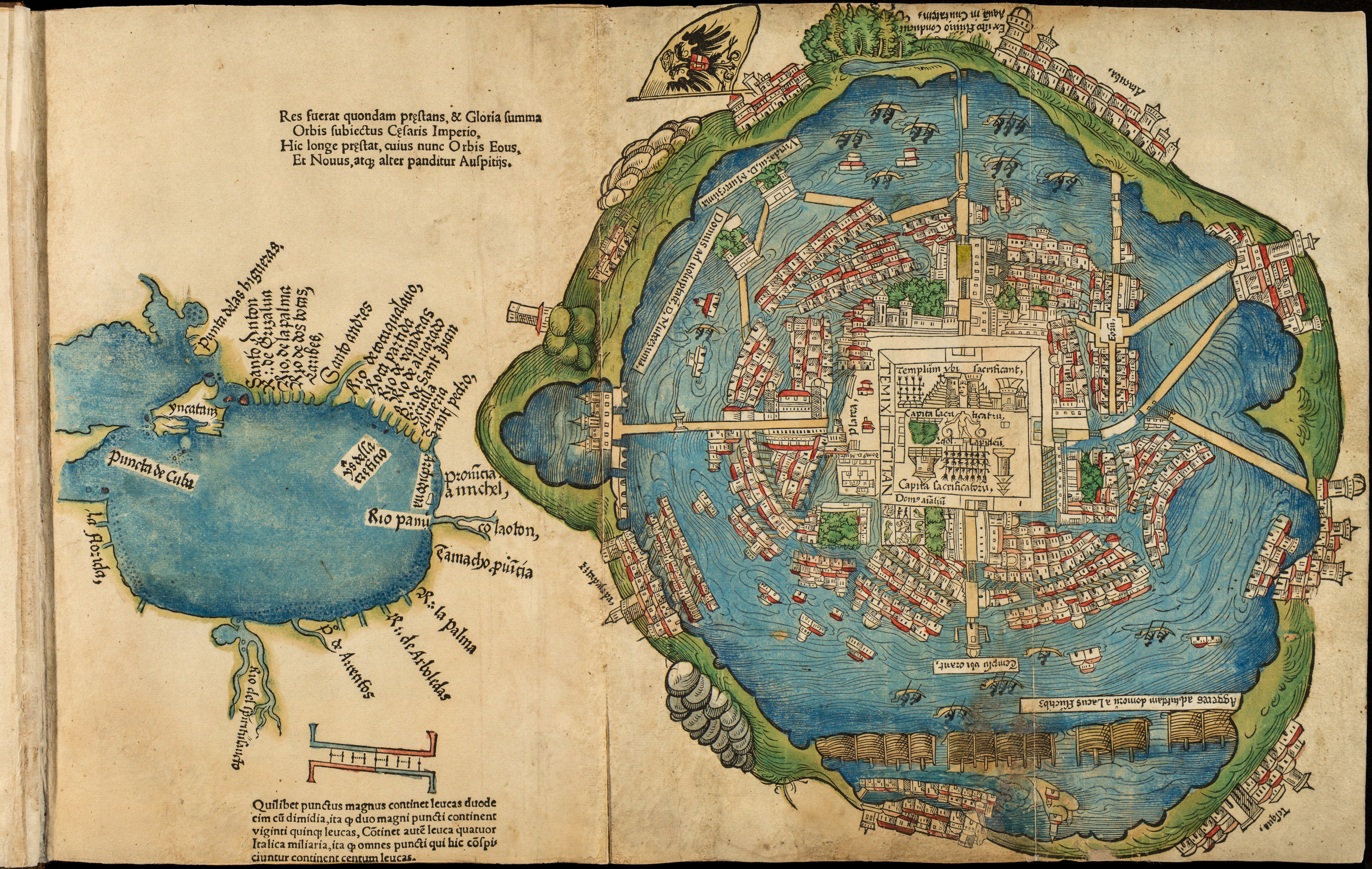
Tenochtitlan and the Gulf of Mexico, 1524. Hand-colored woodcut published with the Nuremberg Latin edition of Hernán Cortés’s account. Newberry Library copy.
The island capital occupies the lake at right, its ceremonial center connected to the mainland by causeways. The Gulf of Mexico appears at left. Published in Nuremberg in 1524, this map places the city Alonso helped conquer within the wider geography reaching European readers. It is an early printed representation, not a modern survey. [14]
Source and attribution ↗After the conquest of Mexico
Guatemala and the southern campaigns
Tenochtitlan was not the only theater in Alonso’s account. He also named service in Guatemala, Oaxaca, Tututepec, Tehuantepec and Zapotec territory. A later Guatemalan chronicler, Francisco Antonio de Fuentes y Guzmán, placed him in a roster introduced as the soldiers who went to the conquest of Guatemala with General Pedro de Alvarado. Fuentes y Guzmán said he had consulted Santiago de Guatemala’s early municipal books. Alonso’s name appears in the first roster, on printed page 60.
That service also appears in a grievance. Alonso said that the Indians assigned to him in encomienda were taken away when he went to Guatemala in royal service. An encomienda was a colonial claim to Indigenous tribute and labor, not simply land. His account speaks from a veteran’s pursuit of reward; the claim itself also shows whose work and resources made that reward possible.
[1] [10]Read the complete translated chapter and view the three source pages ↓
9 January 1529
A voice among the veterans
The conquerors’ disputes over the spoils of victory reached a public confrontation on 9 January 1529. Their meeting in Mexico City’s main church grew heated, and the Audiencia sent them to its own house to vote individually for representatives. Alonso chose Verdugo, Mansilla, Mexía and Carvajal. These four men won the election. The names beside his own are his recorded votes, not relatives.
Two days later the elected procurators received authority to pursue the veterans’ claims against Cortés and other captains for shares of conquest wealth and to press for the distribution of Indigenous tributaries. Alonso’s vote places him in this political struggle after the siege: an individual choice preserved amid the ambitions and divisions of the men who had fought together.
[2]A household and the assessment of 1542
A household in Puebla
In Los Ángeles, Alonso described a house with his wife and family, arms and horses, three legitimate sons and two legitimate daughters. Yet he told the Crown that the allowance paid to him from the royal treasury could not sustain them. The account pressed his service and his family’s needs together into a claim for support.
A 1542 assessment offers a sharper glimpse of later life. It calls him a “good person,” says he received appointments to middling corregimientos, or district administrative posts, and records that he was blind and partly disabled. The assessment gives no cause for the disability and describes his wife only as a woman from Castile. His daughter Leonor becomes clearer in later family records.
[1] [3]Testimony in 1565 recalling 1521
Remembering Tlaxcala’s contribution
More than forty years after the siege, Tlaxcala sought recognition for what its people had done. Its 1565 interrogatory called seventeen Spanish veterans to testify under oath, Alonso among them. He said that the Indians of Tlaxcala had cut and shaped the planks and beams for the brigantines, and called the vessels a contribution worthy of great reward because they had helped bring about the capture of Mexico.
His testimony restores Indigenous labor and skill to a fleet that dominates so many accounts of the siege. It makes Alonso a named witness to the work; it does not identify him as a shipbuilder.
[4]1571 and about 1604
Leonor and the family record
The next surviving family date is 30 April 1571. A Puebla parish priest baptized Melchior, son of Juan de Castañeda and his wife Leonor Soltero. Decades later Baltasar Dorantes de Carranza identified this Leonor as Alonso’s legitimate daughter and named Melchor de Castañeda among the conquistador’s grandsons. Together the entries carry the story from one man’s service to an identifiable family line.
Dorantes wrote around 1604 with a keen interest in the fortunes of conquerors’ descendants. His family account and the earlier parish entry preserve different parts of the relationship: a daughter and grandson named in the chronicle, a mother and son named in the baptism. The companion lineage follows their descendants through Mexico and New Mexico.
[5] [6]Alonso in local memory
A later remembrance
Long after Alonso’s lifetime, a seated Spaniard associated with his name entered Acaxochitlán’s local memory. The town’s polychrome lienzo is known through later copies, photographs and revisions, with 1738 and 1824 layers recorded in its history. Municipal chronicler Arturo Castelán Zacatenco identifies the figure as Alonso Soltero in a 2025 commemorative graphic. The image shows how he has been remembered; it is not a likeness drawn from life.
From the historical record
Alonso in Acaxochitlán’s remembrance
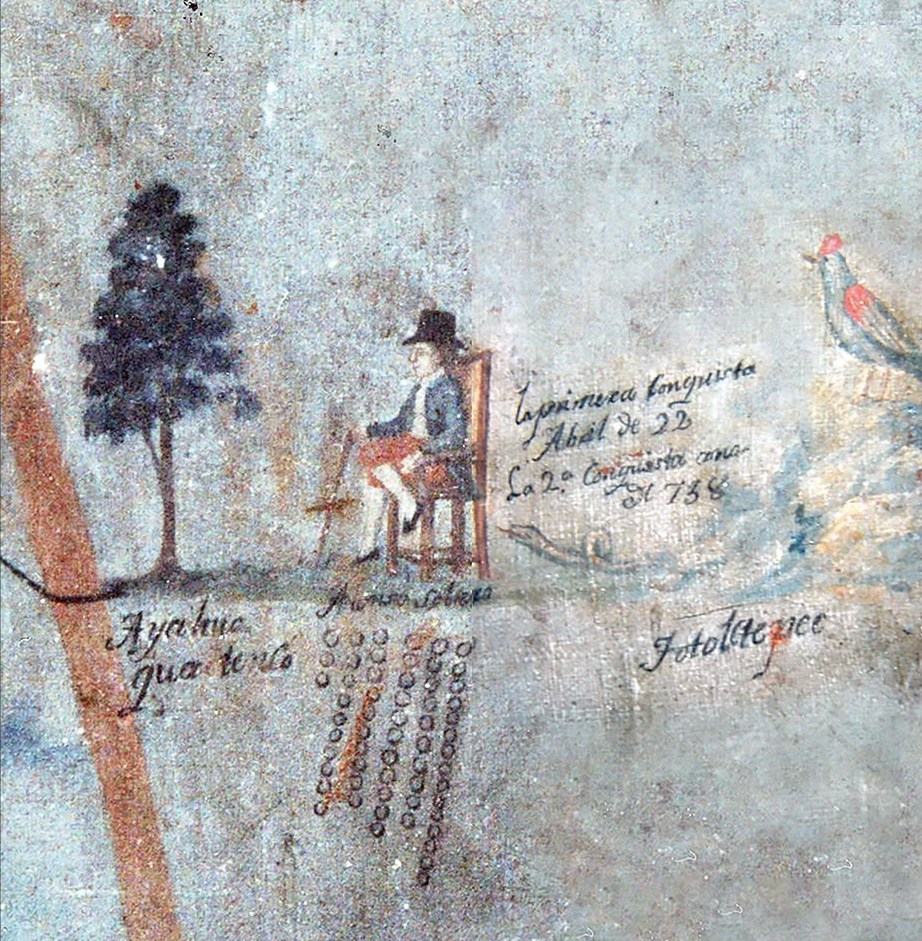
Seated figure identified as Alonso Soltero by Acaxochitlán’s municipal chronicler Arturo Castelán Zacatenco. Detail from his 2025 commemorative graphic, associated with the town’s polychrome lienzo.
Acaxochitlán remembers a seated Spaniard in its polychrome lienzo. Earlier writers read his name as Alonso Sotero; municipal chronicler Arturo Castelán Zacatenco identifies him as Alonso Soltero. The map tradition records 1738 and 1824 copying or revision layers and survives through photographs and later copies. The image is a later remembrance of conquest, rather than a likeness made during Alonso’s lifetime. [15] [16] [17] [18]
Source and attribution ↗A life in the record
Dates, documents and descendants
- 1521
- 9 January 1529
A recorded vote
Named voter in the election of representatives for the conquistadors in Mexico City. [2]
- 11 May 1542
A veteran’s circumstances
An assessment describes his marriage, corregimiento appointments, blindness, and partial disability. [3]
- 1565
Witness for Tlaxcala
Testimony credits Tlaxcalan labor and craftsmanship in building the brigantines. [4]
- 30 April 1571
A grandson’s baptism
Puebla register names Melchior’s parents as Juan de Castañeda and Leonor Soltero. [6]
- About 1604
The family in an early chronicle
Dorantes identifies Leonor as Alonso’s legitimate daughter and Melchor as his grandson. [5]
The next generations
A story carried forward
Follow the family from Alonso through Leonor Soltero, the Castañeda and Ruiz families, New Mexico, and the Wisely family. The companion lineage presents each parent–child connection beside its records.
Read the complete lineageDocumentary appendix · Guatemala campaign
Recordación Florida, Chapter VI
Fuentes y Guzmán’s later chronicle describes the soldiers who went to Guatemala with Pedro de Alvarado and lists Alonso Soltero among them. These three selected pages show the chapter heading, the author’s account of his municipal sources, and Alonso’s entry. [10]
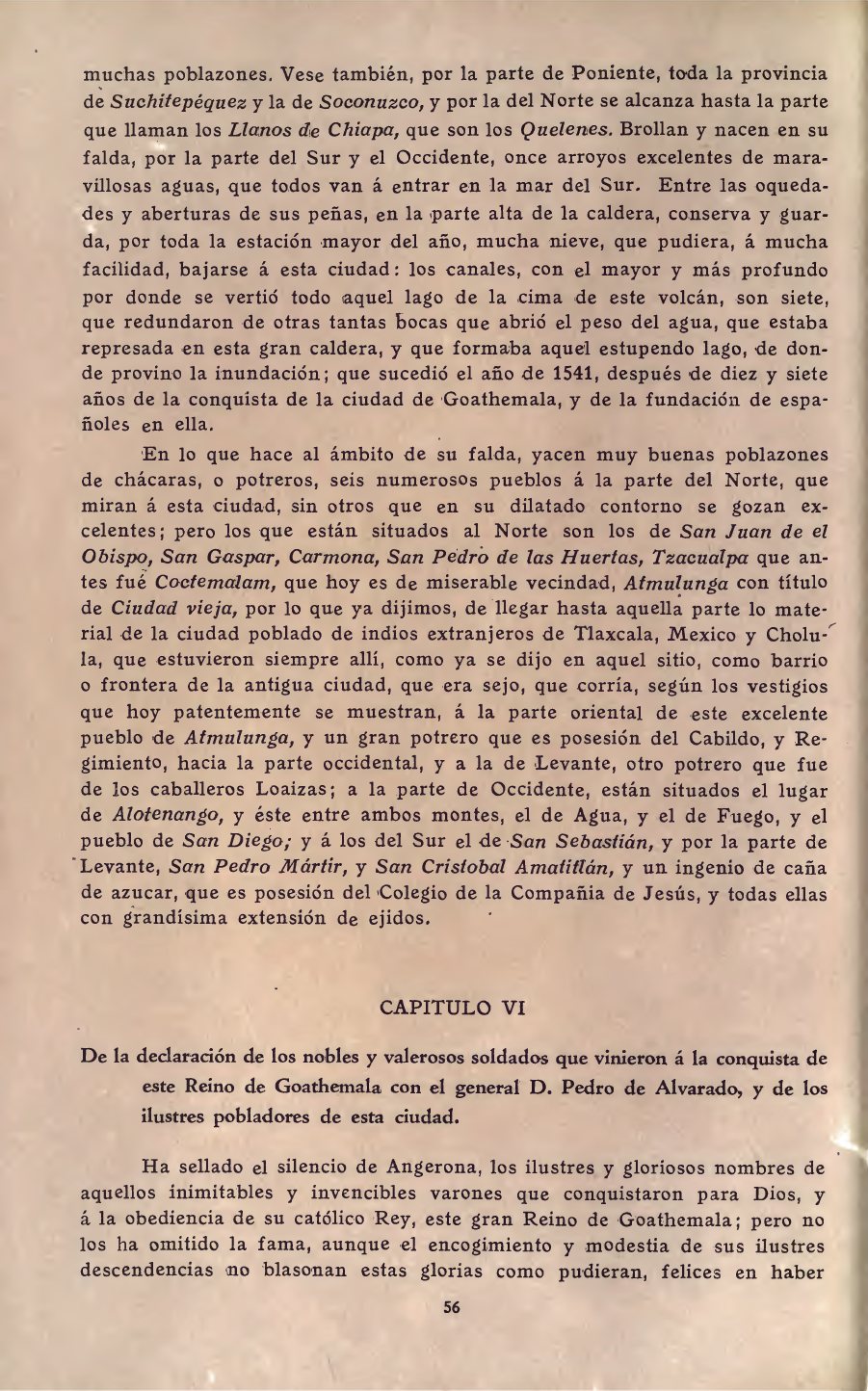
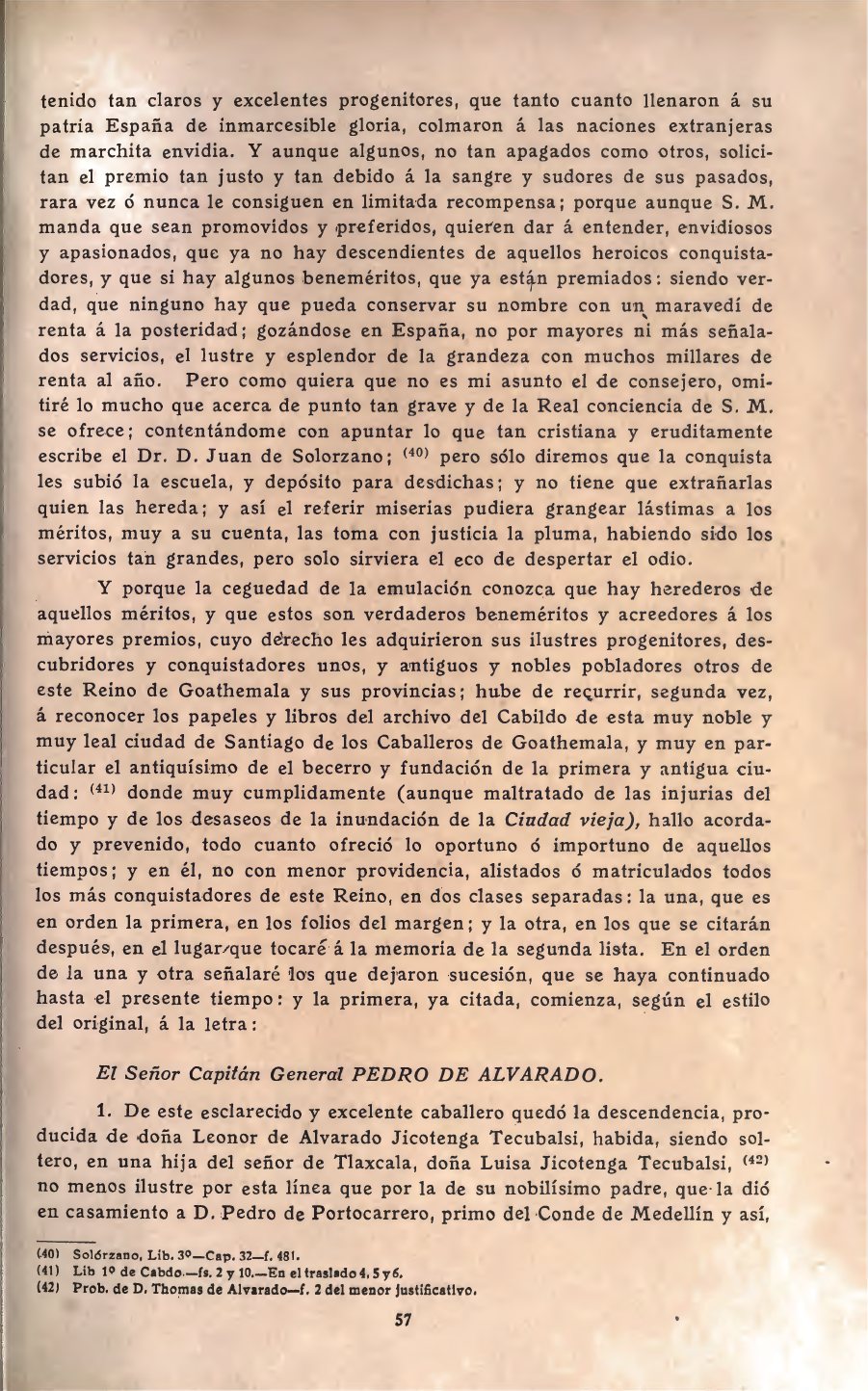
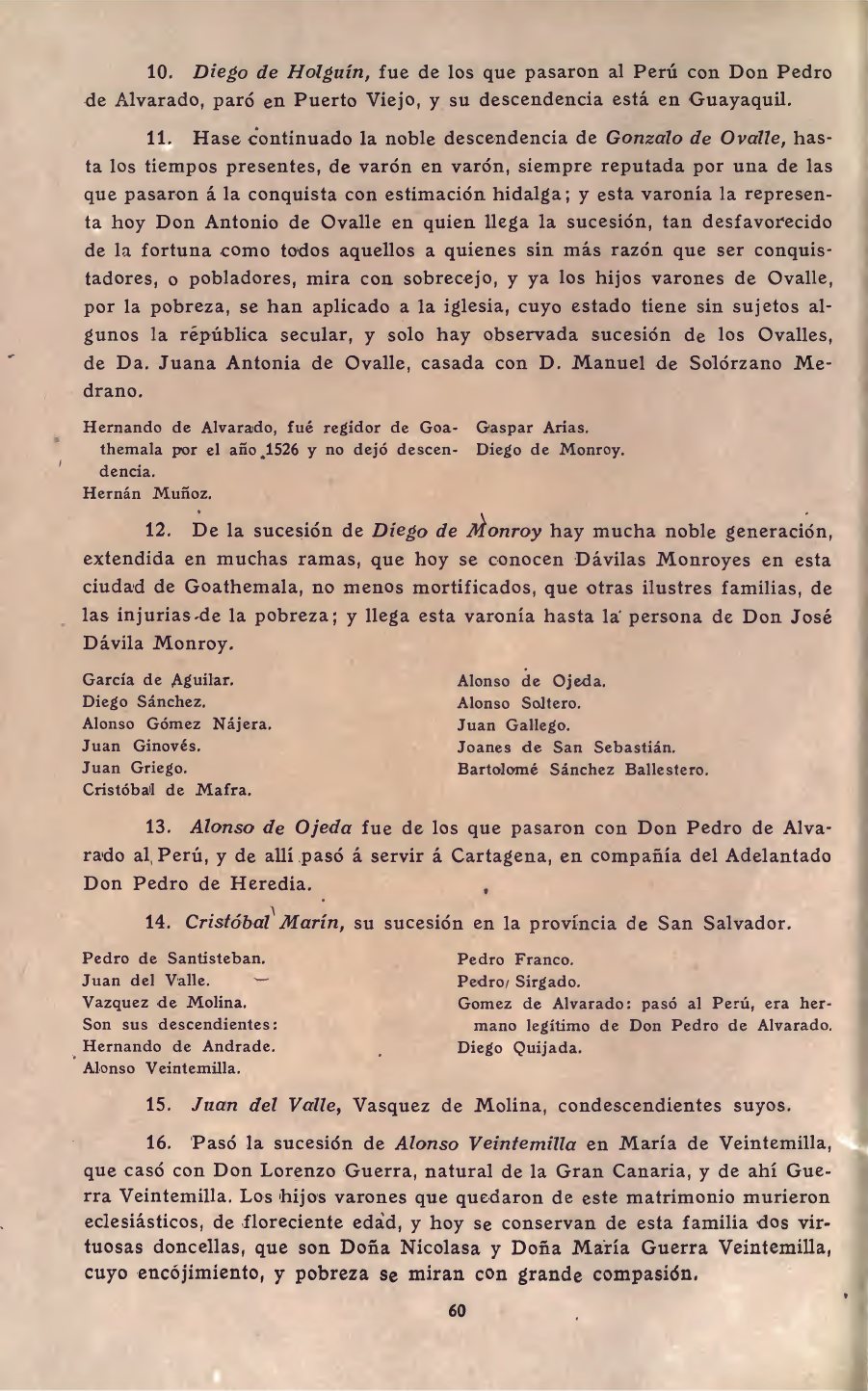
Francisco Antonio de Fuentes y Guzmán, Recordación Florida, primera parte, libro III, capítulo VI, in Biblioteca Goathemala, vol. VI, tomo I (Guatemala, 1932), printed pp. 56–64 (PDF pp. 75–83). Read the full source, pp. 56–64 ↗
Chapter VI · complete English translation
The passage begins at the chapter heading on printed page 56 and ends before Chapter VII on page 64. The linked volume contains every page.
CHAPTER VI Account of the noble and valiant soldiers who came to the conquest of this Kingdom of Guatemala with General Don Pedro de Alvarado, and of the illustrious settlers of this city.
The silence of Angerona has sealed the illustrious and glorious names of those inimitable and invincible men who conquered this great Kingdom of Guatemala for God and brought it into obedience to their Catholic king. Fame, however, has not forgotten them, although the reserve and modesty of their illustrious descendants do not proclaim these glories as they might. They were fortunate to have had such distinguished and excellent forebears, who, as greatly as they filled their Spanish homeland with unfading glory, filled foreign nations with withered envy. And although some, less withdrawn than others, seek the reward so justly owed to the blood and sweat of their ancestors, rarely or never do they obtain even a limited recompense. For although His Majesty orders that they be advanced and preferred, envious and impassioned people seek to suggest that there are no longer any descendants of those heroic conquerors, and that if any deserving ones remain, they have already been rewarded. The truth is that there is not one who can preserve his name for posterity with a single maravedí of income, while in Spain, for no greater or more distinguished services, people enjoy the lustre and splendour of the grandees with many thousands in annual income. But since it is not my task to act as a counsellor, I shall omit the much that might be said on a matter so grave and so concerning His Majesty’s royal conscience, contenting myself with referring to what Doctor Don Juan de Solórzano writes in so Christian and learned a manner.[40] We shall say only that the conquest became for them a school and repository of misfortunes, and those who inherit them have no reason to find them strange. Thus, although recounting their poverty might win compassion for their merits, the pen rightly takes those merits upon itself, the services having been so great; yet it would serve only as an echo to awaken hatred.
And so that the blindness of envy may recognize that heirs to those merits do exist, that they are truly deserving and entitled to the greatest rewards—a right acquired for them by their illustrious forebears, some discoverers and conquerors, and others ancient and noble settlers of this Kingdom of Guatemala and its provinces—I had to return a second time to examine the papers and books in the archive of the municipal council of this very noble and very loyal city of Santiago de los Caballeros of Guatemala. In particular, I examined the very ancient register and foundation book of the first and old city.[41] There I find, most fully—although the book has been ill-treated by the injuries of time and the disorder caused by the flooding of the Old City—everything duly recorded and provided for that those times presented, whether timely or untimely. In it, with no less foresight, most of the conquerors of this kingdom are enrolled or registered in two separate classes: one, first in order, on the folios cited in the margin; the other on those that will be cited later, where I come to discuss the second list. Following the order of the first, I shall indicate those who left descendants whose lines have continued to the present. The first list, already cited, begins, following the form of the original, word for word:
Lord Captain General PEDRO DE ALVARADO.
1. From this distinguished and excellent gentleman remained the descendants issuing from Doña Leonor de Alvarado Jicotenga Tecubalsi, whom he fathered while unmarried upon a daughter of the lord of Tlaxcala, Doña Luisa Jicotenga Tecubalsi.[42] She was no less illustrious through that line than through that of her most noble father, who gave her in marriage to Don Pedro de Portocarrero, a cousin of the Count of Medellín; and thus, although in the line of a daughter born out of wedlock, she was so well cared for by her illustrious father that, when he returned from Spain married to Doña Beatriz de la Cueva and found her widowed from Don Pedro de Portocarrero, he joined his daughter Leonor in marriage to his brother-in-law Don Francisco de la Cueva, son of Don Pedro de la Cueva, Admiral of Santo Domingo, Grand Commander of Alcántara, and brother of the Duke of Alburquerque. From this Doña Leonor de Alvarado Jicotenga and Don Francisco de la Cueva comes the descent of Don Pedro de Alvarado, and it reaches, today, Don Tomás de Alvarado Villacreces, Cueva y Guzmán, his brothers, and the others who can prove their descent from Don Pedro de Alvarado; but this will be through Doña Leonor, because Don Pedro and Don Diego, sons of Doña Beatriz, died without descendants. Ten other brothers and relatives of this gentleman crossed over with him to the conquests of these kingdoms of New Spain: the brothers were Jorge, Gonzalo and Gómez de Alvarado, and Juan de Alvarado the illegitimate son; the first cousins were Hernando, Alonso, Diego, Luis and Francisco; and there was Juan, his uncle. All of them served with great distinction, especially Alonso de Alvarado, who served as maestre de campo [field commander] in Peru, and Diego de Alvarado, who died in that kingdom's civil war, both always taking the king's side. And Jorge de Alvarado was married in the presence of the Church to Doña Lucía Xicotenga Tecubalzin, another daughter of the lord of Tlaxcala and Zempoal. From this Jorge and Doña Lucía comes the descent of the Xirones, Tovillas and Lobos Ximenes. There is considerable confusion in this lineage and in that of Alvarado with Doña Luisa Xicotenga, there having been two women, Luisa and Lucía, by whom the two Alvarado brothers had descendants.
Diego de Rojas, who went to Peru, and Baltasar de Mendoza, the first alcaldes [municipal magistrates].
2. From Baltasar de Mendoza there is a line of illustrious blood, although in a family much diminished by the affliction of poverty, in the lineage of those called Delgado, Hurtado de Mendoza.
Don Pedro Portocarrero; Domingo Zubisarreta, Juan Pérez Dardón; Hernán Carrillo, the first town councillors in the year 1524. Alonso de Reguera, scribe to His Majesty and to the town council.
3. Juan Pérez Dardón left worthy and illustrious descendants whose succession has continued to this day; it now reaches Doctor Don Lorenzo Dardón, schoolmaster of this Holy Cathedral Church, and Licentiate Don Luis Dardón, a priest of proven virtue. Nevertheless, so that the name of this excellent captain may continue, there are some brothers of the said Don Luis, through whom the excellent merits and fruits in His Majesty's service of that noble stock may be reborn in new shoots. That stock also spread its branches and connections into the families of Salazar, Mosalve and the Delgados de Náxera, Colindres, Puerta, Ximenez and Vélez, and others distinguished by blood and deeds of great merit, which we see at the beginning of this history.
4. Señor Jorge de Alvarado married a daughter of the treasurer Alonso de Estrada in Mexico City, and he always kept his home there. His descendants who are in this city of Goathemala come from his first marriage, which he contracted in this city with Doña Francisca Xirón. This family of Francisco Xirón has its main stock in the city of Granada, in the Province of Nicaragua, and here in Goathemala it is represented by Don Joseph Lobo Xirón and Don Fernando de la Tovilla y Gálvez, a gentleman well known and esteemed for his deeds.
Pedro Gómez; Juan Paez.
5. These descendants of Juan Paez, always regarded and held in the standing of a noble family, are known today by the surname Paez de Grageda. For many years, compelled by the struggles of want and their limited means, they have lived in retirement in the town of Guazacapan, sustained by the produce of a poor rural estate. Their line now reaches Don Nicolás Páez de Grageda.
Bartolomé Sánchez; Juan Sánchez de Huelva, descendant of Alonso Sánchez de Huelva, who was the pilot who gave the papers to Columbus. Gaspar de Polanco.
6. Gaspar de Polanco had descendants continuing from male to male, and they always attained political and military offices of the first rank, as leading persons of distinguished quality. This male line reached Don Fernando de Polanco; and, continuing through a woman, Doña Bárbara de Polanco y Castillo, this line is represented by her legitimate sons by Don Martín de Alvarado Villacreces, Cueva y Guzmán, and today by the eldest, Don Tomás de Alvarado, Cueva y Guzmán.
Juan Cano; Juan de Alcántara. Alonso Martín, Asturian; Antonio Gómez, from Pastrana. Juan de Reinoso, sacristan; Martín Granado. Alonso Gallego; Bartolomé Gómez.
7. From Juan Cano come the Cano Gaytán, a noble and worthy family which, while remaining illustrious and well connected by marriage, still cannot sustain itself in its poverty.
8. Isidro de Mayorga went to León in Nicaragua, and his descendants are there.
Pedro Alonso de Portillo; Diego Díaz, town crier. Juan Vázquez.
9. The descendants of Juan Vásquez have been known by the surnames Vázquez de Cabrera and commonly regarded as a noble family, made still more illustrious by their outstanding virtue. Their male line is represented today by Don Antonio Vázquez de Cabrera.
Gaspar Luis; Diego de Holguin. Juan Rodríguez; Cristóbal Rodríguez Picón. Hernando Pizarro; Cristóbal Ruiz. Juan Godínez, cleric and chaplain; Gonzalo de Ovalle.
10. Diego de Holguín was among those who went to Peru with Don Pedro de Alvarado. He settled in Puerto Viejo, and his descendants are in Guayaquil.
11. The noble descendants of Gonzalo de Ovalle have continued to the present time from male to male, always regarded as one of the families that came to the conquest with the esteem due to hidalgos. This male line is represented today by Don Antonio de Ovalle, to whom the succession has come, as little favored by fortune as all those upon whom she looks askance for no other reason than their being conquistadors or settlers. Now the male children of Ovalle, because of their poverty, have devoted themselves to the Church, a condition that leaves secular civic life without any of these men. The only continuing descent of the Ovalles now observed is through Doña Juana Antonia de Ovalle, married to Don Manuel de Solórzano Medrano.
Hernando de Alvarado was a town councillor of Goathemala about the year 1526 and left no descendants; Gaspar Arias. Hernán Muñoz; Diego de Monroy.
12. Among the descendants of Diego de Monroy there is a large noble progeny, spread through many branches now known as Dávilas Monroyes in this city of Goathemala. They are no less afflicted than other illustrious families by the injuries of poverty; and this male line reaches the person of Don José Dávila Monroy.
García de Aguilar; Alonso de Ojeda. Diego Sánchez; Alonso Soltero. Alonso Gómez Nájera; Juan Gallego. Juan Ginovés; Joanes de San Sebastián. Juan Griego; Bartolomé Sánchez Ballestero. Cristóbal de Mafra.
13. Alonso de Ojeda was among those who went to Peru with Don Pedro de Alvarado, and from there he went to serve in Cartagena, in the company of the adelantado Don Pedro de Heredia.
14. Cristóbal Marín: his descendants are in the province of San Salvador.
Pedro de Santisteban; Pedro Franco. Juan del Valle; Pedro Sirgado. Vazquez de Molina; Gomez de Alvarado: he went to Peru; he was the full brother of Don Pedro de Alvarado. His descendants are: Hernando de Andrade; Diego Quijada. Alonso Veintemilla.
15. Juan del Valle: Vasquez de Molina, his co-descendants.
16. The line of Alonso Veintemilla passed to María de Veintemilla, who married Don Lorenzo Guerra, a native of Gran Canaria, and from them came the Guerra Veintemilla. The sons who survived from this marriage died as churchmen in the prime of life, and two virtuous unmarried women of this family remain today: Doña Nicolasa and Doña María Guerra Veintemilla, whose secluded circumstances and poverty are viewed with great compassion.
Francisco López, of Marchena; Francisco de Orduña. Pedro Sánchez Montesinos; Martín de la Mezquita. Juan de Valdivieso; Miguel Quinteros. Alvaro Alonso Notes; Gonzalo de Solís. Francisco de Chaves: went to Peru; Berhardino de Oviedo. Pedro de Aragón; Pedro Aburta. Diego Sánchez, blacksmith; Ignacio de Bobadilla. Diego Franco; Francisco Domínguez. Pedro Moreno; Alonso Ortiz de Zafra. Pedro Garcerán; Diego de Usagrez. Juan Moreno; García de Avalos. Antonio Diosdados. Jorge de Acuña. Juan de Espinal. Antonio de Salazar.
17. Abalos are Avalos y Quevedo; he has descendants, and in this city the line reaches Father Marcos de Avalos y Quevedo, assistant cantor.
Antonio Diosdado; Alonso Gómez de Loarca.
18. Don José de Lara Mogrobejo, accountant of the Tribunal of the Crusade, and his siblings represent the merits of Alonso Gómez de Loarca, being his great-great-grandchildren through their mother.
19. Juan de Espinal. He has descendants known for their virtue and conduct.
20. From Antonio de Salazar, who served with great distinction in war and very continuously and with complete trust in every civil matter that arose, until after the flood of the city, there remained a continuing line of descendants, well known among the illustrious families of this kingdom as one of them. Today Don Juan de Salazar Monsalbe represents his male line and his worthy merits, and through a woman, Captain Don Tomás Delgado de Nájera and his brother, Bachelor Don Pedro Delgado de Nájera, a priest of praiseworthy and proven qualities.
Francisco Castellón; Juan de Barrientos. Pedro de Cueto.
21. No less than other famous conquerors of these kingdoms of New Spain, Pedro de Cueto served in all their conquests with many great merits, and with the same perseverance and proven zeal in civil affairs, occupying the foremost offices in this city. His descendants have continued to the present in Juan de Medina Cueto, although almost unknown because of the limited means in which he lives. The outstanding virtue of this family might make it better known, especially the distinguished memory of Bachelor Jacinto de Medina Cueto, a priest of illustrious and admirable life, edifying humility and modesty, who died last year, 1685, with a reputation for exceptional and wonderful virtue. Through both surnames they descend from true conquerors.
Pedro de Valdivieso; Diego López de Villanueva. Juan Durán; Juan de Lunas. Francisco de Arévalo.
22. From Francisco de Arévalo, who served as diligently and as ardently as others in peace and war, there remained known descendants whose line continues today through a woman in Don José de Lara Mogrobejo, accountant of the Tribunal of the Crusade, and his illustrious siblings. Other descendants of this conqueror Arévalo are learned religious, especially distinguished in the practice of the virtues, of the Observant Order of my patron Saint Francis. Their surname is Vazquez; through that name they have another conqueror ancestor in the male line, while another line, as will be related below, is that of Molina.
Gómez de Ulloa.
23. Gómez de Ulloa went to Peru with other gentlemen to settle the cities of Lima and Quito. Thus, in the City of the Kings—and I do not know whether there proceeds from this gentleman—the very illustrious and very well-known distinction of the descendants of the Ulloas Coronados who are in Panama, as also in this city of Guatemala, where, having come to this community, they are known as Vásquez, Coronados and Ulloas. My municipal council has been honoured and adorned by these persons, who also occupy leading military posts. Yet they still do not enjoy what the distinction of their rank requires, for none of these gentlemen has a real of income from Indians, nor anything beyond what other deserving native families have: offices which, though highly honourable, entail substantial expense. Service in imitation of their forebears would be of greater merit than service for reward, of which we are always deprived. This line continues in Captain Don Ignacio de Coronado y Ulloa, married and with descendants; in Master Don Carlos de Coronado y Ulloa, parish priest of the district of San Antonio Suchitepéquez; and in Doña María Coronado y Ulloa, wife of the cavalry commissioner Don Melchor de Mencos, a great servant of the king our lord. (Deleted in the original by the author.)
24. Gonzalo de Alvarado, chief constable, remained a resident of Guatemala. This gentleman, like others of that surname, was a legitimate brother of the adelantado Don Pedro de Alvarado. From him proceeded another illustrious family known in this city, although ill-favoured by fortune in the possession of worldly goods: the illustrious family called Vides de Alvarado. Their surnames proclaim the praises of their noble blood and services, and fame does not forget their notable virtue. Gonzalo de Alvarado was admitted as a municipal councillor of this city on 1 February 1535.
Diego de Alvarado.
Diego de Alvarado, cousin of the adelantado Don Pedro and one of the captains in the conquests, was a municipal councillor of this city of Guatemala in 1531. He went to Peru to assist the conquerors of that empire and to settle there. Finding himself amid the disputes of the Almagristas and Pizarristas, and remaining on the side of royal obedience,[43] he went to Spain to inform the lord Emperor Don Carlos of the disturbances in that country, and died at the court in Valladolid.
Diego García de Berlanga; Hernando de Chaves.
25. Hernando de Chaves was a captain in the conquests of the kingdoms of Mexico and Guatemala, always serving in the cavalry. Having married in Guatemala, he had a legitimate daughter by Isabel de Vargas, Doña Catarina de Chaves, who married Don Rodrigo de Fuentes y Guzmán, the author’s great-grandfather. Another of his younger daughters married Don Pedro de Aguilar Laso de la Vega, a knight of the Order of Calatrava. For both reasons I represent these merits in the same relationship and degree as Doña Elvira and Doña Jacobina de Aguilar, my cousins in the third degree: I through my father, Don Francisco de Fuentes y Guzmán, and they through theirs, Don Francisco Antonio de Aguilar y de la Cueva, a knight of Santiago, who were first cousins.
García de Salinas; Diego Sánchez de Ortega. Sancho de Varona.
26. The illustrious descendants of Sancho de Varona survive and remain in this city. His male line divided into several branches in the two elder sons of Don Pedro de Varona, Don Gaspar and Don José. The eldest son, Don Gaspar Varona de Loaisa, a knight of the Order of Alcántara, went to Spain with his brother Don Alvaro to serve His Majesty in the army of Extremadura. Having spent more than thirteen years on those campaigns, Don Gaspar remained in those kingdoms to enjoy his entailed estate and lordship of La Fuente del Maestre, where he has descendants in the succession to that estate. As regards representation of the merits of conquest, the descendants of Don José de Varona in this city are Don Pedro, who is married, and his sons Licentiate Don Antonio de Varona, parish priest of Chiquimula, and Friar García de Varona of the Order of Saint Francis.
Pedro de Paredes; Francisco de Morales. Diego Ponce; Juan Recino.
27. Pedro de Paredes was the brother of Antonio de Paredes, municipal councillor of Guatemala. Both were descendants of Diego García de Paredes. Although Pedro de Paredes left no descendants, Antonio de Paredes did. His descendants include the Reverend Father Emeritus Friar Francisco Vásquez, of the Seraphic Order, chronicler of his province and a credit to his homeland, and Doña Jacinta Vásquez de Paredes.
28. Juan Recino had descendants who continued in this city of Guatemala. Today his true and praiseworthy merits are represented by Licentiate Don Nicolás Recino, cantor of this holy cathedral church and commissary of the Holy Office of the Inquisition, and by other deserving descendants of his in the province of San Salvador, such as Don Francisco Recino, Doña Catalina, Doña Josefa and Doña Isabel Recino.
Cristóbal de Salvatierra; Martín Isquierdo. Hernando de Espinosa; Eugenio de Moscoso.
29. The descendants of Eugenio de Moscoso continued to Doña María and Doña Francisca de Moscoso, his great-great-granddaughters. Since their deaths, the only remaining member of this lineage is Licentiate Don Tomás de Lyra y Moscoso, a priest and son of Doña María de Moscoso.
Diego de Santa Clara; Alonso de el Mármol. Joanes de Verastigui; Pedro Lequeitio. Juan García de Badajoz; Joanes de Fuenterrabía. Joan de Escobar; Pedro de Llanos. Diego Ponce; Juan de Cuevas. Francisco Lozano; Diego López de Tegero. Diego de Aguilar; Martín Rodríguez. Diego de Salvatierra; Gonzalo de Salinas. Juan de Salvatierra; Juan de Carmona.
30. Today no further memory remains of the descendants of Juan de Carmona than Friar Juan de Carmona, a religious of Saint Francis, and María, Manuela, Francisca and Cecilia de Carmona, his great-great-granddaughters.
Esteban de Aponte; Francisco Rodríguez. Juan Venancio. And many others who are away.
Notes printed with the chapter
[40] Solórzano, book 3, chapter 32, folio 481. [41] First book of the municipal council, folios 2 and 10; in the copy, 4, 5 and 6. [42] Probanza of Don Thomás de Alvarado, folio 2 of the [unclear term] supporting document.
[43] Gómara, chapter 141, folio 178.
The later chronicler says that he consulted municipal books. The roster names Alonso Soltero. The Peru and Cartagena statement in numbered remark 13 concerns Alonso de Ojeda.